
You’ve got your new brand guidelines in place: logos, colours, typography and beautifully designed graphics that finally reflect your business. Everything looks cohesive, professional and designed to connect with your customers.
Now comes the next, and often underestimated, stage of a rebrand or brand refresh: implementing your new branding across your entire business.
This step is so important because when handled well, it strengthens your brand identity and helps customers recognise and trust your business instantly. But if it’s done poorly, it can end up costing you time, money and even potential customers.
One of the most common mistakes I see is inconsistent branding. Some assets are updated while others still show the old logo, colours or visual style. Your website might reflect your new look, but your social media, emails or printed materials still show the previous branding.
The problem? Inconsistency weakens your brand.
Consistency is one of the most powerful tools in professional brand design. When your visuals are aligned everywhere your business appears, it signals professionalism, clarity and confidence. It tells your audience that you know exactly who you are and what you stand for.
For small businesses and growing brands in the UK, this kind of consistent visual identity builds credibility and helps you stand out in a crowded market.

Get useful articles just like this, every month, straight to your inbox.
So how do you roll out your new branding effectively?
1. Set a launch date. Start by planning a clear, realistic brand launch date. Think about any lead times you need for things like printing, installations or digital changes then plan back from this, always allowing time for delays.
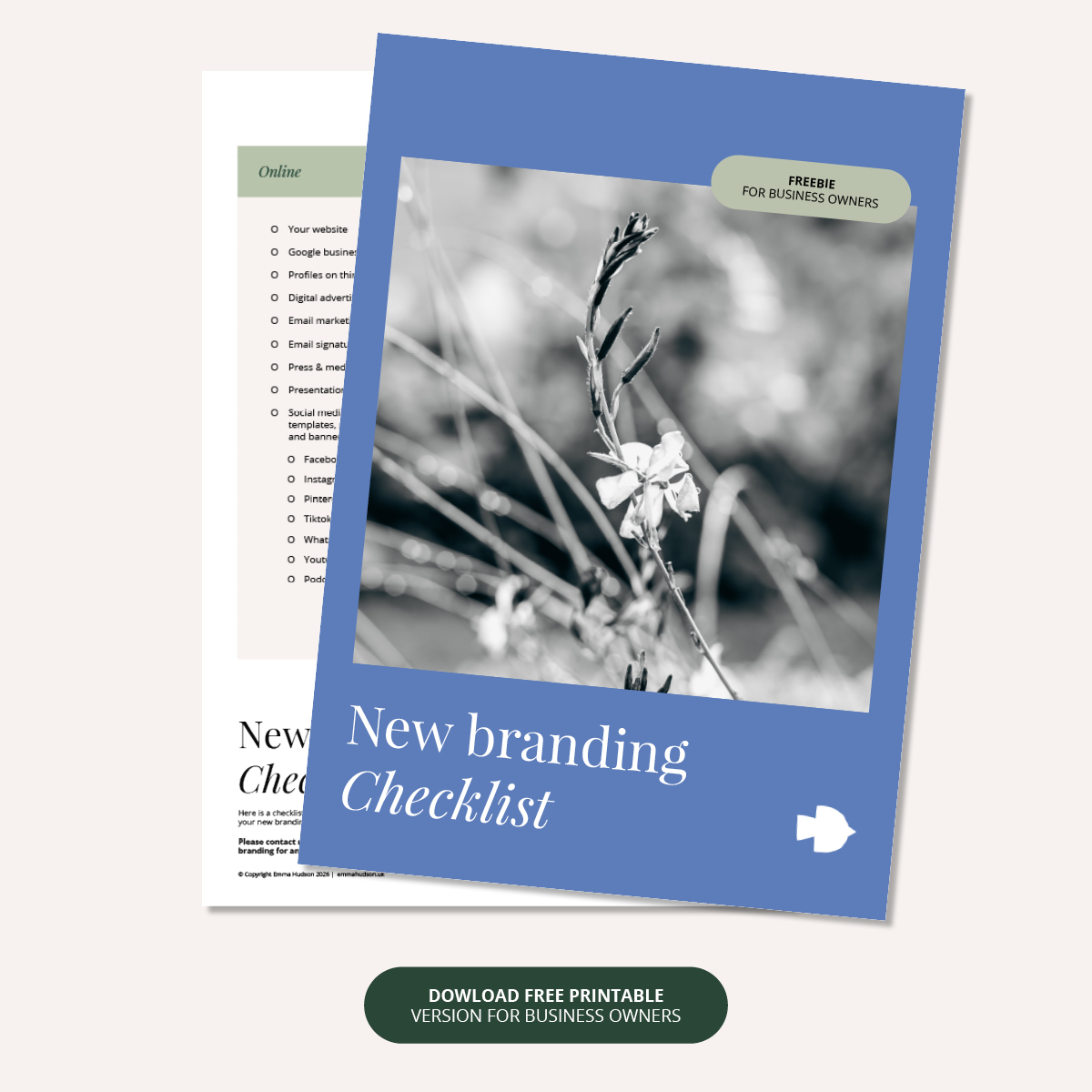
2. Plan each touchpoint. It’s a helpful to have a checklist if you’re working through a rebrand and want to make sure nothing gets missed. To make the process easier, I’ve put together a list of the most common places within a business where branding and graphic design assets need updating; you can save, download or print this below. This includes online media, offline places and social media.
3. Put together your launch content. Your visuals and messaging are critical here so I’ve put together a specific article just for this topic which breaks down exactly what you need – What content to create to launch a rebrand.
4. Seek help. There’s a lot to do and it can be really overwhelming for small businesses owners. It may be worth searching for a local graphic designer or a brand designer to support your rebrand, this step is where thoughtful planning makes all the difference. Done well, it turns your new brand identity into a powerful tool that supports your marketing, strengthens your brand presence and helps your business grow.
5. Consider a teaser. A change in branding, especially a big one, can sometimes feel like a bit of a jolt for your customers, like walking into your best friends house and all the interiors have changed. It can feel disorientating and not make sense at first. For some rebrands it might be worth telling your customers that something new is coming, for others this might not be a necessary step. Think about your customer – do they prefer comfort or excitement? Are they the type that will welcome something new or push back against it? If you need this, send it out on your channels a week or two beforehand.
6. Brief your staff. If you have multiple staff within your business, make sure they are all fully briefed (include everyone!) on all the changes that are happening so they can field any questions from customers with confidence and also feel invested themselves in the changes that you’ve made. You could even use a launch to your staff as the practise run for the real thing.
7. Time to launch. Set aside dedicated time to implement the changes and aim to update as many customer-facing touchpoints as possible at once. A coordinated rollout helps ensure your customers experience your brand consistently across every platform. In the run up, get ready as much as possible in the background to avoid last minute panics – putting all your changeover assets into labelled folders will really help.
Are you a business owner who needs support with creating beautiful, professional graphic design for your brand?

 Freelance Creative based in Falmouth Cornwall, UK